

A quote-ready requirements package helps suppliers price the same scope, expose assumptions and identify missing engineering work before sample approval.
Short answer: A useful electronics RFQ identifies the product family, target market, exact configuration, customization depth, quantity scenario, test requirements, packaging, documentation and commercial terms. Mark unknowns as open decisions. Do not ask suppliers to quote “the same quality” without an acceptance standard.
Why vague RFQs create incomparable quotes
Two suppliers can answer the same short inquiry with different assumptions about memory, wireless modules, accessories, software work, certification scope, packaging and inspection. Their prices may look comparable while the deliverables are not.
The purpose of an RFQ is not to remove every engineering question. It is to establish one controlled baseline and show which items still need supplier confirmation. A good response should separate included scope, options, exclusions, one-time engineering costs, sample work and production pricing.
The RFQ checklist
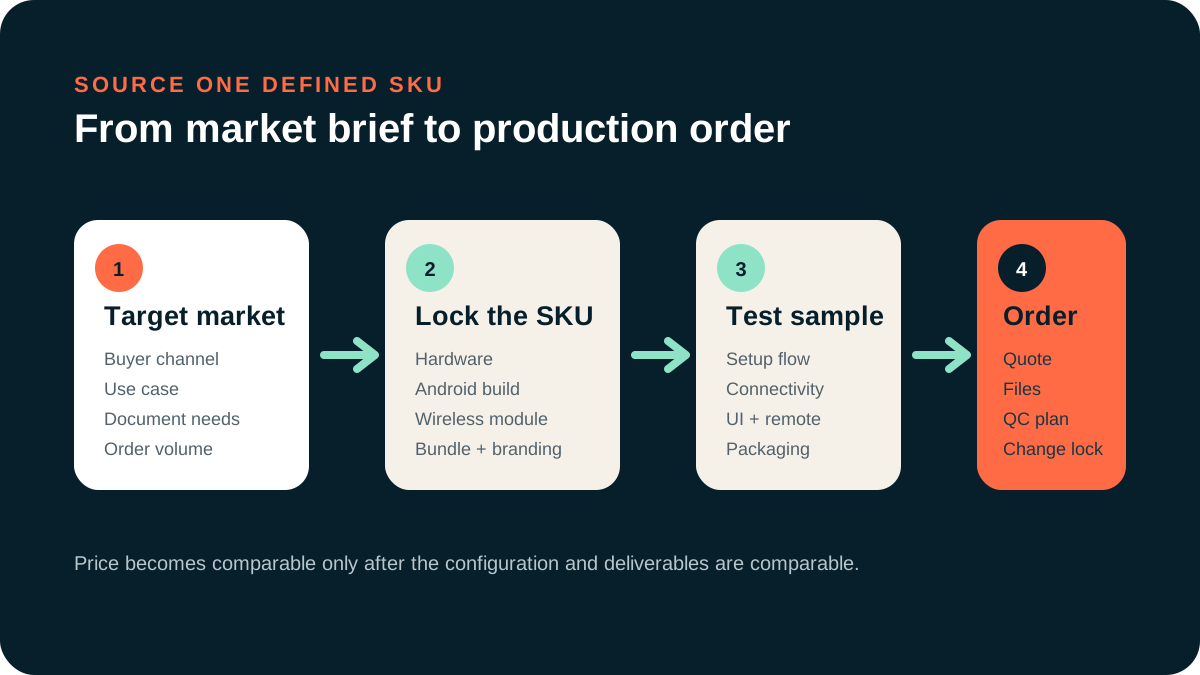
1. Business and market context
- Buyer company and primary contact.
- Target country or region, sales channel and intended user.
- Requested quotation currency, trade terms and destination.
- Target launch window or required decision date, clearly marked as a request rather than an assumed supplier commitment.
2. Product identity
- Product family and reference model.
- Required chipset or performance class, memory and storage, interfaces, wireless functions, power supply and accessories.
- Operating system or platform route, required applications and update expectations.
- Approved reference photos, drawings or a product requirements document.
3. Customization depth
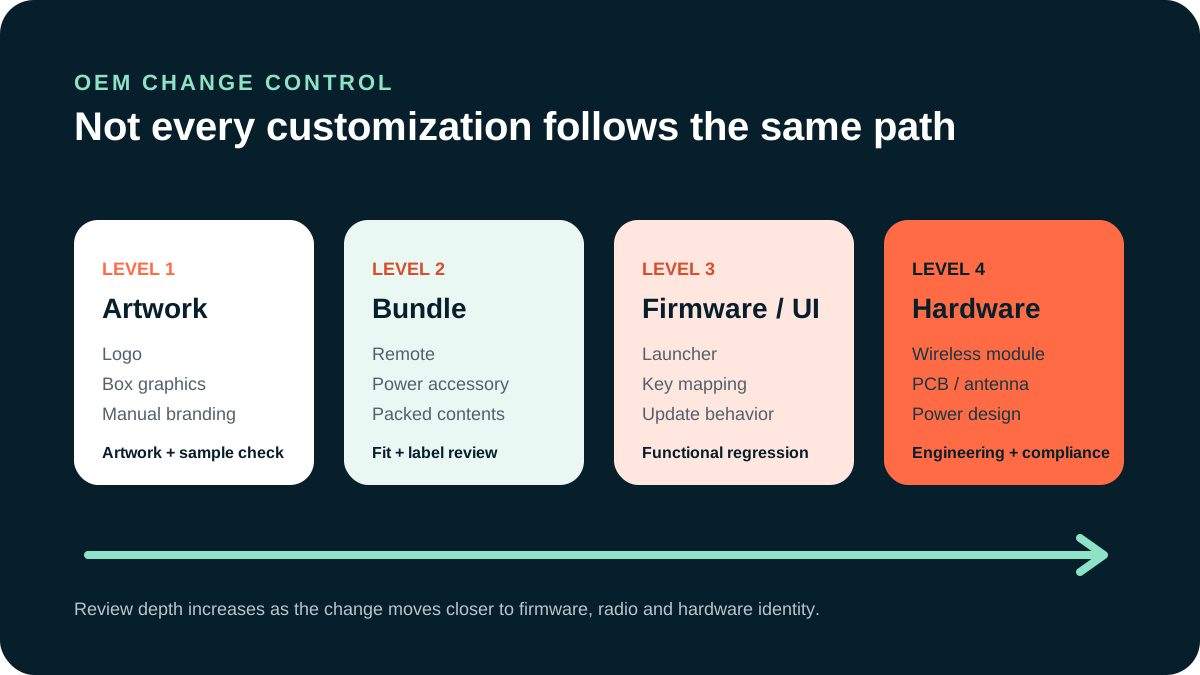
State whether the project is existing-model branding, UI or firmware customization, PCB changes, private tooling, or a new design. List logo, enclosure color, boot animation, launcher, remote, packaging, manual, label and application changes separately. If ownership of source files, tooling or design output matters, request the proposed ownership terms in writing.
4. Quantity scenarios
Provide a sample quantity, pilot quantity and expected production quantity or range. Ask the supplier to identify price breaks and minimums rather than inserting an assumed MOQ into the RFQ. If the forecast is uncertain, say so and request scalable options.
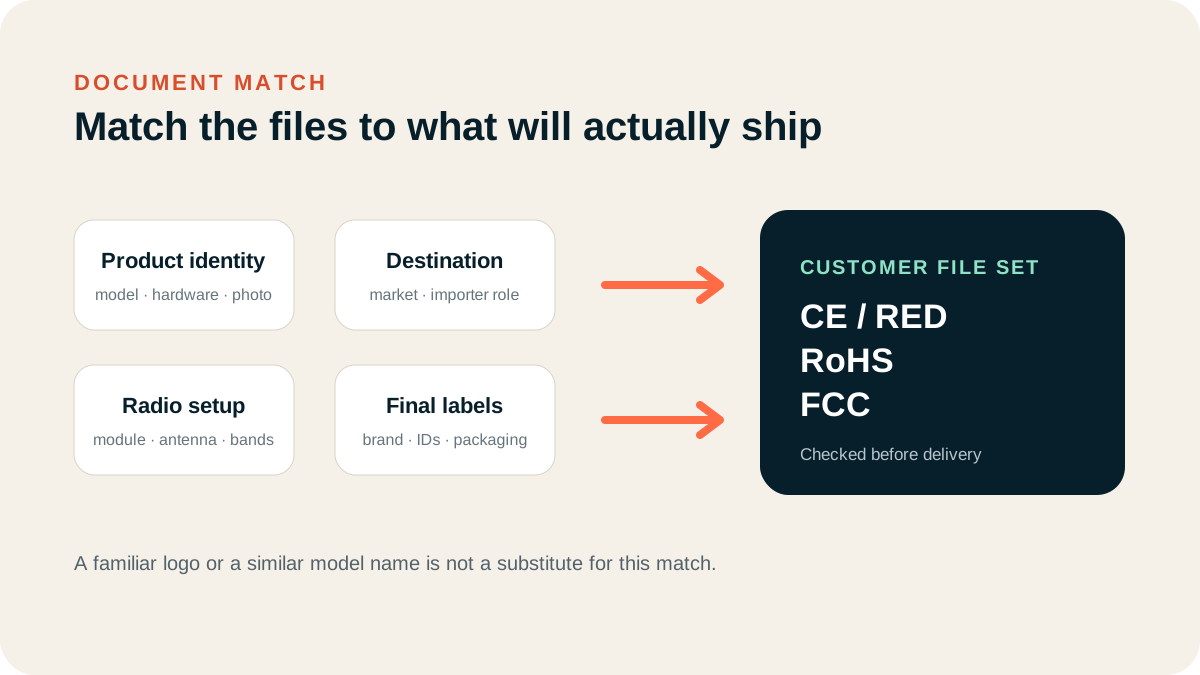
5. Compliance and platform scope
- Target-market compliance documents required for the exact product version.
- Platform-certified version requirements, if applicable.
- Label, manual, adapter and packaging requirements by market.
- Evidence format, report owner and validity expectations.
6. Sample and acceptance plan
- Sample type: standard, branded, software-customized or engineering prototype.
- Configuration record and build identity required with the sample.
- Functional, visual, packaging and reliability tests.
- Who performs each test and what evidence closes a failure.
- Golden-sample approval and allowed production variation.
7. Packaging and logistics
- Retail or bulk packaging, artwork language, marks, barcode and label data.
- Included accessories and regional power-adaptor requirements.
- Carton, pallet, drop-test or transport requirements where applicable.
- Shipment destination, requested trade term and inspection point.
8. Commercial response format
Ask every supplier to return the same fields: configuration, unit price by quantity, sample cost, tooling or engineering charges, included and excluded customization, requested payment terms, quotation validity, production schedule assumptions, packaging, warranty or after-sales scope, and unresolved questions. Commercial terms remain proposals until agreed by both parties.
Use an assumption register
| RFQ item | Buyer requirement | Supplier response | Status |
|---|---|---|---|
| Platform route | Named route and required apps | Exact version and evidence | Confirmed / option / open |
| Hardware | Configuration baseline | Part or module mapping | Matched / substitution proposed |
| Customization | Itemized change list | Included work and limitations | Included / quoted separately |
| Testing | Acceptance matrix | Test owner and evidence | Agreed / revision needed |
| Commercial | Quantity and trade terms | Price, charges and assumptions | Comparable / incomplete |
Minimum RFQ package
For an early supplier screen, send a one-page requirement summary, configuration table, customization list, quantity scenario, target market and response template. For sample approval, add drawings or artwork, test matrix, document list and change-control record.
If the project model is still unclear, read OEM vs ODM Electronics Manufacturing before fixing the quotation scope. Review the available TOPLEO OEM/ODM project paths for the distinction between branding, software, PCB and private-mold work.
Sources
- ISO 9001: quality-management-system requirements overview
- Android Open Source Project: compatibility-program overview for Android device scope
- East West Manufacturing: RFQ checklist
Ready to send an electronics RFQ?
Share the product, target market, configuration, quantity and customization list. Open items can be identified before sample work begins.